Iot

Counting Bees with Pure OpenCV (No Neural Networks): What Fits on a Raspberry Pi

Counting Bees with Pure OpenCV (No Neural Networks): What Fits on a Raspberry Pi

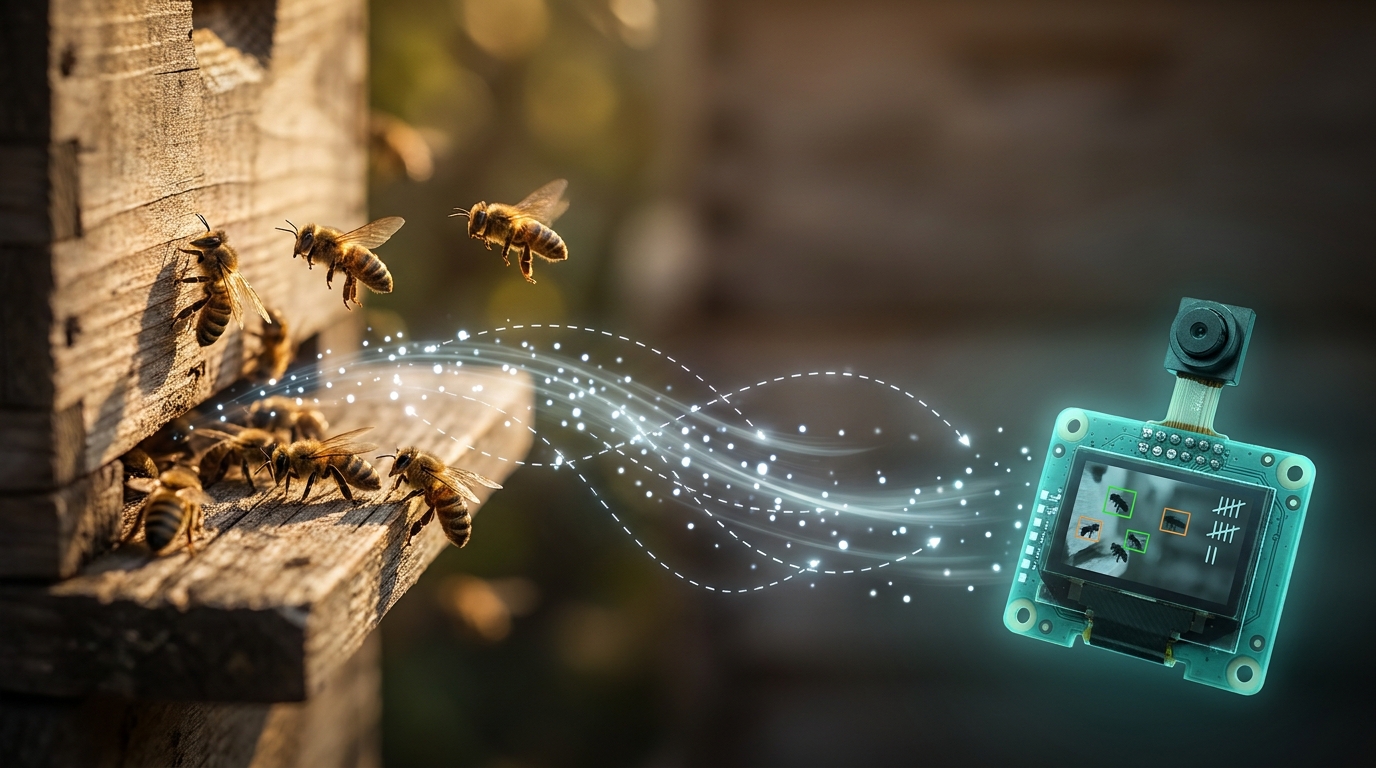
Zero neural networks. A bee counter that detects, tracks and counts honey bees in and out of a hive entrance, measured at 988 FPS on a desktop x86 CPU — with the target platform a ten-year-old Raspberry Pi 3B (4× Cortex-A53 @ 1.2 GHz, 1 GB RAM). The idea fit into one sentence. The implementation — architecture, code, parameter tuning, evaluation harness, even the scene-configuration proposals — came out of conversations with an AI agent (Gemini 4 Argon).

ESP32 WiFi Voltmeter: HTTPS, WebSocket, and Browser GPS Without an App

No app install. No Play Store. No pairing. Open your phone’s browser, accept a certificate warning, and see live voltage readings with GPS coordinates — pushed over an encrypted WebSocket every 400ms. The path from Bluetooth to this point took 5 iterations, one afternoon, and an AI coding agent that tested every change on real hardware.

ESP32 BLE Voltage Monitor: End-to-End in 6 Hours

A complete Bluetooth voltage monitoring system — ESP32 reads voltage via ADS1115 ADC, broadcasts over BLE GATT, and an Android app displays live readings in real time. Built end-to-end in ~6 hours across 3 platforms.

The goal: measure voltage wirelessly and display it on your phone. Simple enough, but it means touching embedded C++, Bluetooth protocols, and Android Kotlin — all in one session. Here’s how the 6 hours broke down and what we learned along the way.

WiFi Energy Monitor

My new project consists of HW with cost under 20€. It is able to accurately measure electric power consumption and sends data via WiFi. Great source of knowledge is openenergymonitor.org which includes also Arduino library.